


High Carbon Silicon For Ferro Silicon Production
Products Description
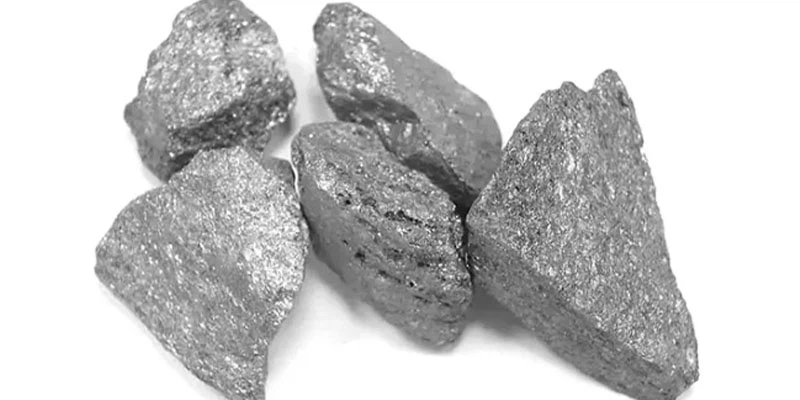
High Carbon Silicon for Ferro Silicon Production is a novel composite metallurgical material primarily composed of silicon and carbon, supplemented by small amounts of iron and trace elements. Its silicon content typically ranges from 40% to 72%, and its carbon content from 10% to 24%. The compositional ratios and particle sizes (customizable from 1 mm to 100 mm) can be tailored to meet the specific requirements of ferrosilicon production. As a by-product of industrial silicon production-refined and purified through high-temperature smelting-it offers a multifaceted array of advantages, including reducing capabilities, silicon enrichment, and energy conservation. Specifically engineered to facilitate the reduction reactions involved in ferrosilicon production, it serves as a pivotal material for replacing traditional raw materials and enhancing overall production efficiency.
Product Parameters
|
Product name |
High Carbon Silicon for Ferro Silicon Production |
|
Chemical Composition |
Silicon (Si) |
|
Carbon (C) |
|
|
Aluminum (Al) |
|
|
Sulfur (S) |
|
|
Phosphorus (P) |
|
|
Iron (Fe) |
|
|
Ash Content |
|
|
Physical Properties |
Appearance |
|
Common Particle Size |
|
|
Density |
|
|
Melting Point |
|
|
Performance & Application |
Main Function |
|
Application Scenarios |
|
|
Packaging & Storage |
Packaging Method |
|
Storage Requirements |
Application Process of High Carbon Silicon in Ferrosilicon Production
1. Raw Material Pre-treatment: The high carbon silicon is crushed to the required particle size according to production specifications. It is then uniformly mixed-in precise proportions-with other ferrosilicon raw materials, such as silica and coke, to ensure an even distribution of materials and enhance reaction efficiency.
2. Furnace Charging: The prepared mixture is fed into smelting equipment, such as an electric arc furnace. With the furnace temperature maintained at approximately 2000°C, the high carbon silicon rapidly undergoes reduction reactions at high temperatures, releasing elemental silicon which subsequently combines with iron to form ferrosilicon.
3. Reaction Control: Throughout the smelting process, high carbon silicon effectively maintains a stable reducing atmosphere within the furnace, thereby minimizing oxidation reactions. Its addition rate can be adjusted in real-time based on furnace conditions to ensure reaction stability and prevent operational fluctuations.
4. Product Purification: Upon completion of the reaction, the material undergoes a series of post-processing steps-including slag removal, cooling, and crushing-to yield high-quality ferrosilicon products. Compared to products derived from traditional raw materials, the resulting ferrosilicon exhibits higher purity, fewer impurities, and greater compositional stability.
Packaging and Shipping

About Us

We are always at your service when you need
Henan Tieyao Trading Co., Ltd. is located in the ancient capital Anyang, the hometown of oracle bone inscriptions. It is a production-oriented enterprise integrating production, domestic sales and export. The company's main products include: silicon calcium alloy, alloy cored wire, ferrosilicon alloy, silicon manganese alloy, ferrosulfide, carburizer, inoculant, metal silicon, silicon carbon alloy, spheroidizer and other metallurgical refractory products. The company always adheres to the business philosophy of "customer-centered, market-oriented, and development with integrity", and adheres to the service tenet of "grasping quality, keeping reputation, strict management, emphasizing science, and emphasizing service".
FAQ
Q1: Can High Carbon Silicon truly serve as a substitute for traditional raw materials in ferrosilicon production?
A1: Absolutely. High-carbon silicon serves a dual function, acting as both a reducing agent and a silicon-enriching additive. It can directly replace traditional raw materials-such as ferrosilicon, carbon additives, and silicon carbide-in ferrosilicon production without requiring any modifications to existing equipment. Furthermore, it offers superior reduction efficiency and lower costs. As verified through practical application by numerous ferrosilicon manufacturers, its use effectively enhances both production efficiency and product quality.
Q2: Can the particle size specifications and chemical composition of high-carbon silicon be customized?
A2: Yes. We support full customization of specifications: silicon content can be adjusted within the range of 40%–72%, carbon content between 10%–24%, and particle size specifications can be tailored from 1 mm to 100 mm. Packaging methods can also be customized according to client requirements-whether in ton bags or other formats-to precisely suit the specific needs of various ferrosilicon production scenarios.
Q3: How much cost reduction can be achieved by using high-carbon silicon in ferrosilicon production?
A3: The specific extent of cost reduction depends on various factors, including the client's production scale, existing processes, and raw material prices. Typically, costs can be reduced by 50–150 RMB per ton of ferrosilicon produced, while simultaneously achieving energy savings of 8%–12%. Over the long term, this translates into significant cost savings and expanded profit margins.
Hot Tags: high carbon silicon for ferro silicon production, China high carbon silicon for ferro silicon production manufacturers, suppliers, factory, storage of high carbon silicon, high carbon silicon tester, value of high carbon silicon, high carbon silicon partnership, exporter of high carbon silicon, logistics of high carbon silicon
You Might Also Like



Send Inquiry