


What are 5-10mm high-carbon silicon granules?
High-carbon silicon granules are metallurgical composite materials made primarily from quartz sand, coke, and steel scrap. They are produced through high-temperature submerged arc furnace smelting, solidification, mechanical crushing, and precise sieving. 5-10mm represents the particle size after strict sieving, ensuring no powder, no excessively large lumps, and uniform, full-bodied particles.
Conventional high-quality 5-10mm high-carbon silicon granules have a stable chemical composition, primarily containing silicon and carbon elements, while strictly controlling harmful impurities such as sulfur and phosphorus. They possess characteristics such as a moderate melting point, strong reactivity, resistance to pulverization, and high absorption rate. Due to their excellent metallurgical properties, this product can perfectly replace traditional ferrosilicon and silicon-carbon alloys, making it a core furnace charge for cost reduction and quality improvement in the foundry industry.
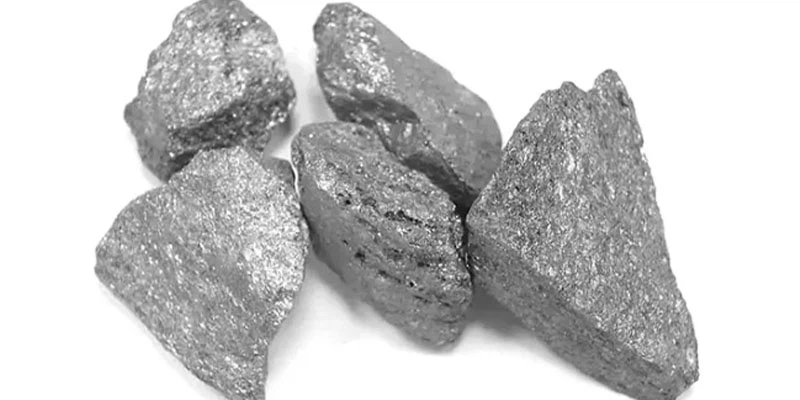
Parameters
| Product name | High Carbon Silicon Granule (5-10mm) |
|
Particle Size |
5-10mm, Precision Screening, Low Tolerance |
|
Silicon (Si) Content |
40% - 68%, Customized Grade Available |
|
Carbon (C) Content |
12% - 20%, High Carbon Efficiency |
|
Sulfur (S) |
≤ 0.05% (Strict Low Impurity Control) |
|
Phosphorus (P) |
≤ 0.04% (Low Harmful Elements) |
|
Main Applications |
Steelmaking Deoxidation, Alloy Composition Adjustment, Cast Iron Inoculant, Furnace Temperature Improvement |
Why prioritize 5-10mm high-carbon silicon granules?
Particle size compatible with most casting and smelting equipment, resulting in a more stable smelting reaction: Foundries commonly use medium-frequency induction furnaces, cupola furnaces, and electric arc furnaces, which have strict requirements on the particle size of auxiliary materials. Particle size directly affects the smelting effect; particles that are too small are easily carried away by the furnace flue gas, causing raw material loss and wasted production costs. Particles that are too large melt slowly, resulting in uneven internal reactions in the molten iron and easily leading to deviations in casting composition.
Low impurity content effectively optimizes casting quality and reduces the defect rate: Defects in castings such as porosity, shrinkage cavities, cracks, and excessive brittleness mostly stem from excessive impurities and unstable chemical composition in metallurgical auxiliary materials. High-quality 5-10mm high-carbon silicon particles are smelted using high-purity raw materials, with strict control over harmful impurities such as sulfur and phosphorus, resulting in minimal fluctuations in composition.
Dense structure prevents pulverization, minimizing transportation and storage losses: Raw materials in the foundry industry are often purchased in bulk and transported over long distances. Some inferior silicon alloy particles are porous and easily break into powder during transportation, causing not only raw material loss but also dust pollution of the production environment.
Main Application Areas of 5-10mm High-Carbon Silicon Particles
Cast Iron Production (Gray Cast Iron, Ductile Cast Iron): This is the core application scenario for high-carbon silicon particles. In gray cast iron smelting, this product can be used as a pre-treatment deoxidizer to eliminate excess oxygen in the molten iron and reduce oxidation inclusion defects. In ductile cast iron production, it can act as a pretreatment inoculant to optimize graphite morphology, prevent graphite floating and distortion, and improve the density of castings. It is widely used in the production of cast iron blanks, cast iron bases, and general cast iron parts, effectively improving the fluidity of molten iron and reducing the tendency for white cast iron.
Cast Steel Smelting and Alloy Steel Processing: In the smelting processes of ordinary carbon steel, low-alloy steel, and wear-resistant steel, 5-10mm high-carbon silicon particles are used for deoxidation and alloying treatment, effectively removing oxygen and sulfur impurities from the molten steel and refining the internal grain structure of the steel. This can improve the strength, toughness, and impact resistance of steel, reduce quality problems such as porosity, cracks, and looseness in cast steel parts, and is suitable for the batch smelting of steel ingots, billets, and cast steel mechanical structural parts.
Construction Machinery and Auto Parts Manufacturing: Industrial parts such as construction machinery castings, automotive chassis components, engine housings, and counterweight blocks require extremely high material stability. Adding 5-10mm high-carbon silicon particles stabilizes the metallographic structure, ensuring uniform hardness and meeting wear resistance standards. These factories often use medium-frequency furnaces for smelting; the 5-10mm particle size minimizes dust generation and loss, perfectly complementing automated feeding production lines.
Municipal Pipelines and Water Supply Castings: Municipal pipes such as ductile iron water supply pipes, sewage pipes, pipe fittings, and flanges require high pressure resistance, corrosion resistance, and resistance to bursting. 5-10mm high-carbon silicon particles optimize the internal structure of the pipes, improving tensile strength and pressure resistance, while strictly controlling harmful impurities to ensure the stability of long-term buried pipeline use. It is a standard furnace charge for pipe foundries.
Metallurgical Scrap Remelting and Medium-Frequency Furnace Refining: Many foundries remelt scrap steel and iron, resulting in raw materials with high impurity levels and large compositional fluctuations. Adding 5-10mm high-carbon silicon particles can quickly adjust the silicon-carbon ratio of molten iron, balance the chemical composition in the furnace, neutralize the unstable factors brought by waste, reduce the difficulty of smelting recycled materials, and greatly improve the utilization rate of waste materials.


