


What is electrolytic manganese?
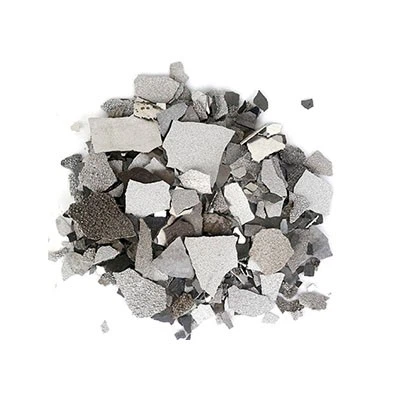
Electrolytic manganese appears as irregular flakes, silvery-white to brownish in color, with one side shiny and the other rough. It is hard and brittle, and when processed into powder, it is silvery-gray. Chemically, it is easily soluble in dilute acids and readily oxidizes in air, but its stability can be improved through passivation. Its unique high purity and low impurity characteristics distinguish it from ordinary metallic manganese produced by thermal methods, making it a "core raw material for performance optimization" in the industrial field.
Why has electrolytic manganese become an industrial necessity?
Outstanding Purity Advantage:Mainstream products maintain a stable purity of 99.7%-99.9%, with extremely low levels of harmful impurities such as sulfur and phosphorus. This allows for precise improvement of downstream product performance and avoids quality defects caused by impurities. Strong Performance Optimization Capability:As an alloying additive, it can significantly improve the strength, toughness, corrosion resistance, and magnetism of steel and non-ferrous metals, making it a "key driver" for material upgrades.
Mature and environmentally friendly technology: Chinese companies generally adopt clean technologies such as anion exchange membrane electrolysis and wastewater recycling. Currently, the industry's overall energy consumption per unit product has decreased by 8% compared to 2020, and the wastewater reuse rate exceeds 90%, aligning with global green production concepts.
High cost-effectiveness: Leveraging large-scale production and the advantages of industrial chain clusters, the unit production cost of electrolytic manganese in China is more than 30% lower than that of overseas counterparts, giving it strong international market competitiveness.


