304L is a standard low-carbon stainless steel. The letter "L" stands for "Low Carbon," meaning its carbon content is strictly controlled to ≤0.030%, far lower than ordinary 304 stainless steel (carbon content ≤0.08%). It is an ultra-low-carbon austenitic stainless steel specifically designed to solve welding sensitization and intergranular corrosion problems, and is widely used in chemical, food, and medical fields with stringent material requirements.

Why is 304L low carbon?
The meaning of the low-carbon designation: "L" is an abbreviation for "Low Carbon," a universally accepted designation in the international stainless steel industry for "low-carbon grade." Marking it "304L" means that its carbon content must meet the strict standard of ≤0.030%, which is the core basis for defining 304L as low-carbon stainless steel.
International Standards Unified Requirements: Global mainstream standards have clear and unified regulations regarding the carbon content of 304L stainless steel, preventing substandard products from entering the market. Specific benchmarks are as follows:
|
Standard System |
304L Grade Code |
Carbon Content Requirement |
Commonly Used Execution Standard |
Core Application Scenarios |
|
US ASTM/AISI |
S30403 / 304L |
≤0.030% |
ASTM A240/A480 |
Chemical Pipes, Pressure Vessels |
|
China GB/T |
022Cr19Ni10 |
≤0.030% |
GB/T 20878-2024 |
Food and Pharmaceutical Equipment, Medical Devices |
|
Europe EN |
1.4307 |
≤0.030% |
EN 10088-2 |
High-end Building Curtain Walls, Precision Components |
|
Japan JIS |
SUS304L |
≤0.030% |
JIS G4304 |
Automotive Decoration, Electronic Precision Parts |
Key Difference from Ordinary 304: The carbon content of 304L is only about 1/3 that of ordinary 304. This low-carbon design retains the basic corrosion-resistant formula of 304 stainless steel (18.0%-20.0% chromium, 8.0%-12.0% nickel) while fundamentally solving the intergranular corrosion problem that easily occurs after welding ordinary 304. This is the core reason why 304L is the preferred choice for high-end applications.
Core Advantages:
Superior Welding Performance: Eliminates the need for post-weld heat treatment, reducing costs and increasing efficiency. During welding of ordinary 304, carbon in the heat-affected zone combines with chromium to form chromium carbide (Cr₂₃C₆), leading to a "chromium-depleted zone" and subsequently causing intergranular corrosion. However, due to its extremely low carbon content, 304L does not precipitate chromium carbide during welding, eliminating the need for additional solution annealing treatment, directly reducing production processes and costs.
Superior Corrosion Resistance: Adaptable to harsh environments, with a longer service life. In normal atmospheric, freshwater, and weakly acidic/alkaline environments, the corrosion resistance of 304L is essentially the same as that of ordinary 304. However, after welding, in high-temperature conditions (400-800℃), or in chloride ion environments, its resistance to intergranular corrosion and pitting corrosion is significantly superior to ordinary 304, maintaining stable performance within a temperature range of -196℃ to 800℃.
Excellent Forming and Processing Performance: Adaptable to diverse customization needs, 304L retains the high ductility and toughness of austenitic stainless steel. It exhibits excellent performance in cold and hot working processes such as bending, deep drawing, stretching, cutting, and polishing. Complex-shaped parts are less prone to cracking during forming, requiring no special process adjustments. Existing processing equipment can be shared with ordinary 304, reducing enterprise modification costs.
Clean and Environmentally Friendly: Meeting high-end industry certification standards, the low-carbon properties of 304L effectively reduce the release of nickel and carbon ions, leaving no harmful residues. It complies with FDA and GMP certification standards, has a smooth and easy-to-clean surface, and reduces microbial adhesion, making it perfectly suited for fields with extremely high cleanliness requirements, such as food, medical, and drinking water industries.
304L vs. 304: Core Comparison
|
Comparison Dimension |
304L (Low Carbon Version) |
304 (Standard Version) |
Selection Suggestion |
|
Carbon Content |
≤0.030% |
≤0.08% |
Choose 304L for multiple welding or no post-weld heat treatment required |
|
Welding Performance |
Excellent, no post-weld heat treatment required |
Ordinary, rapid cooling required to prevent sensitization |
304L is a must for chemical industry and pressure vessels |
|
Intergranular Corrosion Resistance |
Extremely strong (low carbon inhibits chromium carbide precipitation) |
Ordinary (prone to precipitation at high temperatures) |
Choose 304L for food/medical and outdoor scenarios |
|
Cost |
Slightly higher (complex decarburization process) |
Lower (cost-effective) |
304 can be preferred for cost control in non-welding ordinary scenarios |
|
Certification Adaptation |
Compliant with FDA and GMP certifications |
Ordinary grade, difficult to meet high-end certifications |
304L is a must for clean and high-end scenarios |
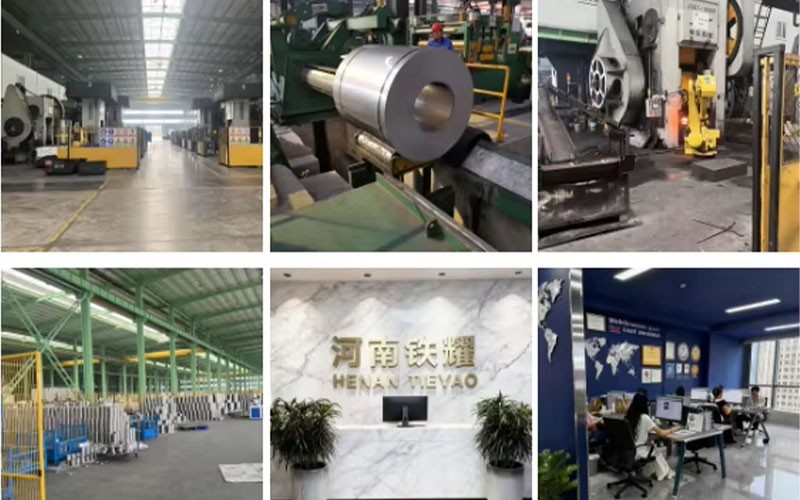
Whether for chemical pipelines, food equipment, high-end decoration, or medical devices, choosing 304L means choosing stability, efficiency, and peace of mind. As a source stainless steel factory, we specialize in the production and supply of 304L low-carbon stainless steel, capable of meeting your customized needs and providing professional services throughout the process. We look forward to establishing a long-term cooperative relationship with you!