


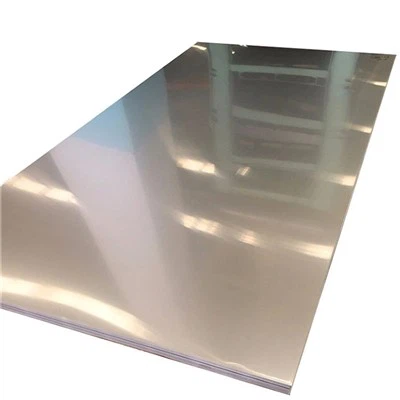
2 mm Steel Sheet
Applications: Ideal for environments that require rust resistance, such as marine, food processing, and medical industries.
Grades: Common grades include 304 and 316, with 316 having superior corrosion resistance due to the presence of molybdenum.
A 2 mm steel sheet refers to a flat piece of steel with a uniform thickness of 2 millimeters. Steel sheets like this are commonly used in many industrial, commercial, and personal applications due to their combination of strength, workability, and durability.A 2 mm steel sheet is an essential material in many industries, from construction to automotive to hobbyist projects. Its balance of strength, workability, and corrosion resistance (depending on the type) makes it a versatile and widely used material.

Products Description
|
Surface
|
2B, NO.1, BA, NO.4, 8K, HL, Polished, Mill, Embossing, Satin, ect with PVC/PE/Laser film
|
|
|
Added Processing
|
Decoiling, Bending, Perforating, Punching, Cutting, Polishing, Welding
|
|
|
Technique
|
Cold rolled; Hot rolled; Hot forming; Cold forming; Heat treatment; Machinability; Welding;
|
|
|
Edge
|
Slit/Mill Edge
|
|
|
Application
|
* 1) Equipment that resists sulfuric acid, phosphoric acid, acetic acid, and acetic acid;
* 2) Petrochemical; * 3) Mechanical and electrical hardware; * 4) Shipyard; * 5) Power plant; * 6) Food Processing and Dairy Industries. |
|
Products Description

Products Description

Products Description

Fabrication Processes
1. Cutting
Shearing: A mechanical process that uses a shearing machine or guillotine to cut steel sheets into desired shapes. It's suitable for straight cuts and can handle 2 mm thickness easily.
Laser Cutting: Provides precise and clean cuts, especially for intricate designs. It's widely used in high-precision industries like aerospace and automotive.
Plasma Cutting: Utilizes a plasma torch to cut through steel sheets. It's effective for thicker materials and offers speed and versatility.
Waterjet Cutting: Uses high-pressure water mixed with abrasive materials to cut steel without generating heat, which can be useful for avoiding material warping.
2. Bending
Press Brakes: Commonly used to bend steel sheets into various angles. The process involves clamping the steel sheet between a punch and a die, then applying pressure to form the desired bend.
Roll Bending: Steel sheets are passed through rollers to create cylindrical or curved shapes. This method is often used in the production of pipes, tanks, and structural components.
3. Forming
Stamping: This process involves pressing steel sheets into a die to create specific shapes or patterns. It's widely used in mass production, particularly in the automotive industry.
Deep Drawing: A type of forming process where a steel sheet is stretched into a desired shape, often used for making products like cans or containers.
Embossing: Involves pressing a pattern onto the surface of the steel sheet, often for decorative purposes or to create a textured surface.
4. Joining
Welding: Techniques like MIG, TIG, and spot welding are used to join steel sheets. MIG and TIG welding are suitable for creating strong, continuous welds, while spot welding is commonly used in sheet metal assembly, especially in automotive manufacturing.
Riveting: An older method of joining sheets where rivets are used to fasten the materials together. It's still used in some structural and automotive applications.
Bolting and Screwing: These methods involve mechanical fasteners to join steel sheets, often used in applications where disassembly is required.
5. Finishing
Polishing: Used to enhance the surface finish of the steel sheet, particularly important in applications like kitchen appliances or decorative pieces.
Painting and Powder Coating: Provides corrosion protection and improves the appearance of the finished product. Powder coating is particularly durable and resistant to chipping, scratching, and fading.
Galvanizing: Involves coating the steel sheet with zinc to prevent corrosion, commonly used in outdoor and marine applications.
Hot Tags: 2 mm steel sheet, China 2 mm steel sheet manufacturers, suppliers, factory, 200 series stainless steel sheet, 201 stainless steel sheet, 202 stainless steel sheet, 300 series stainless steel sheet, 316 stainless steel sheet, 400 series stainless steel sheet
Previous
410 Stainless SheetYou Might Also Like




Send Inquiry