


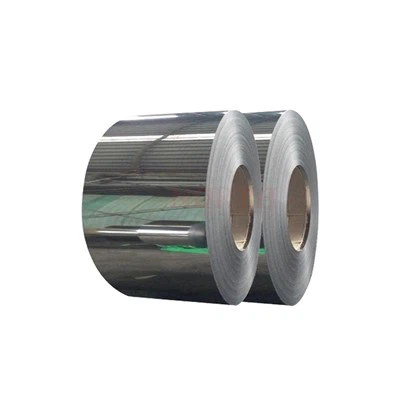
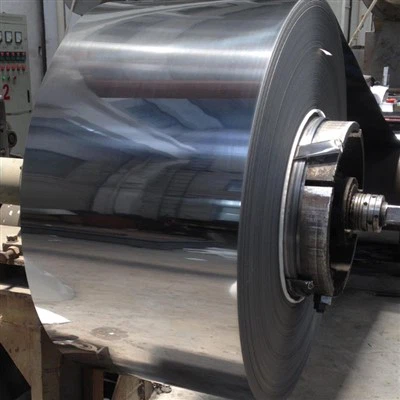
316L Stainless Steel Coil
Melting Point: Approximately 1375-1400°C (2500-2550°F)
Thermal Conductivity: Approximately 16 W/m·K
316L stainless steel is a low-carbon variant of the 316 stainless steel alloy. It is known for its exceptional corrosion resistance, particularly in chloride-rich environments, making it suitable for highly demanding applications. The "L" in 316L stands for "Low Carbon," which enhances its resistance to sensitization and reduces the likelihood of intergranular corrosion.316L stainless steel coils offer exceptional corrosion resistance and durability, making them ideal for applications in marine, chemical, medical, and food processing environments. Their excellent weldability, formability, and resistance to stress corrosion cracking enhance their suitability for demanding applications.


Products Description
|
SURFACE |
DEFINITION |
APPLICATION |
|
NO.1 |
The surface finished by heat treatment and |
Chemical tank, pipe. |
|
2B |
Those finished, after cold rolling, by heat |
Medical equipment, Food industry, |
|
NO.3 |
Those finished by polishing with No.100 |
Kitchen utensils, Building construction. |
|
NO.4 |
Those finished by polishing with No.150 |
Kitchen utensils, Building construction, |
|
HL |
Those finished polishing so as to give |
Building Construction. |
|
BA (No.6) |
Those processed with bright heat treatment |
Kitchen utensils, Electric equipment, |
|
Mirror (No.8) |
Shinning like a mirror. |
Building construction. |
Design and Engineering Considerations
Strength-to-Weight Ratio
Optimizing Design: Utilize 316L stainless steel to achieve high strength-to-weight ratios, beneficial for aerospace, automotive, and structural applications where weight reduction is crucial.
Thermal Management
Thermal Conductivity: Consider thermal conductivity in designs where heat dissipation or insulation is required. 316L has lower thermal conductivity compared to other materials, which can be advantageous or require special considerations based on the application.
Integration with Other Materials
Composite Systems: Combining 316L with other materials such as polymers or composites for enhanced performance in specific applications.
Hybrid Designs: Use in hybrid designs where 316L stainless steel is paired with other metals or materials to achieve desired mechanical and aesthetic properties.
Summary
316L stainless steel coils are renowned for their exceptional corrosion resistance, high strength, and durability, making them suitable for demanding applications across various industries. Their versatility in fabrication, coupled with advanced welding and surface treatment options, enhances their applicability in specialized and high-performance environments. While the initial cost may be higher compared to other grades, the long-term benefits and reduced maintenance make 316L a valuable choice for critical applications.
Hot Tags: 316l stainless steel coil, China 316l stainless steel coil manufacturers, suppliers, factory, 200 series stainless steel coil, 201 stainless steel coil, 202 stainless steel coil, 300 series stainless steel coil, 304 stainless steel coil, 410 stainless steel coil
Previous
301 Stainless Steel CoilYou Might Also Like



Send Inquiry