


Low Aluminum Silicon Calcium Alloy
Product Description
Low Aluminum Silicon Calcium Alloy uses silicon and calcium as its core components. Through a refined smelting process, it strictly controls the aluminum impurity content, offering three core functions: powerful deoxidation, desulfurization, and inclusion modification. This solves the problems of steel defects and casting flaws caused by the high aluminum content in traditional silicon-calcium alloys, making it a preferred metallurgical additive for the production of high-end special steels and high-quality cast iron.

Chemical Composition
|
Item |
High Carbon CaSi 5520 |
High Carbon CaSi 6028 |
|
Si ≥(%) |
55 |
60 |
|
Ca ≥(%) |
20 |
28 |
|
C (%) |
3.0-6.0 |
3.0-6.0 |
|
Al ≤(%) |
2.0 |
2.0 |
|
P ≤(%) |
0.04 |
0.04 |
|
S ≤(%) |
0.04 |
0.04 |
Production Process

Product Advantages
Low Aluminum, High Purity, Eliminating Inclusion Defects: Strict control of aluminum impurity content prevents aluminum from forming hard inclusions with oxygen and nitrogen, improving the ductility, impact toughness, and corrosion resistance of steel. This results in castings with smooth surfaces, free of porosity and sand holes, perfectly meeting the needs of high-end precision manufacturing and the export of special steels.
Powerful deoxidation and desulfurization, purifying molten metal: Calcium has a strong affinity for oxygen and sulfur in molten steel or iron, resulting in rapid and thorough deoxidation and desulfurization. The low density of the products facilitates flotation and removal, significantly improving the purity of the molten metal. Simultaneously, it improves the morphology of inclusions, making them spherical and refined, thus optimizing the processing performance of steel.
High adaptability, reducing production costs: Uniform composition, moderate melting point, rapid melting after feeding, and high absorption rate reduce the amount of alloy used.

Product Shipment

Client Visit

Exhibitions

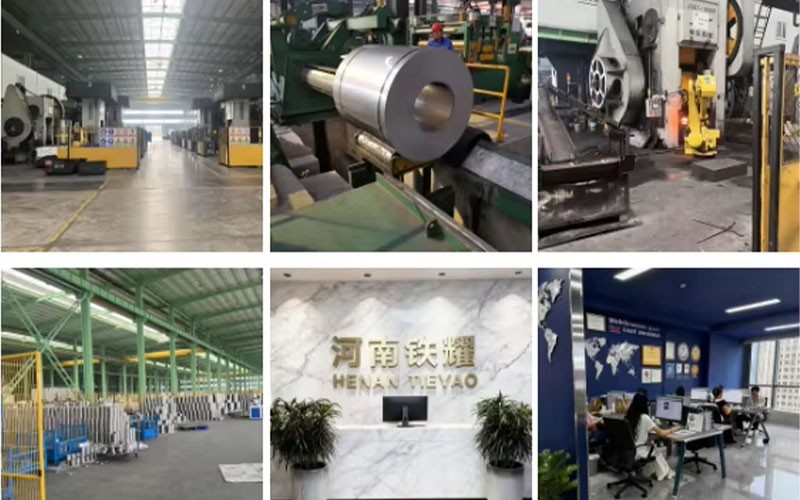
Our Factory

Our Advantages
FAQ
Q1: What is the core difference between low-aluminum silicon-calcium alloy and ordinary silicon-calcium alloy?
A1: The biggest difference lies in the strict control of aluminum content. Ordinary silicon-calcium alloys generally have a high aluminum content, easily leading to hard inclusions and substandard performance in steel or castings. Low-aluminum silicon-calcium alloys, through refining processes, control the aluminum content to 1.0% or less, and can even achieve ≤0.5% ultra-low aluminum, adapting to the stringent standards of high-end metallurgy and export steel, resulting in more stable deoxidation and desulfurization effects and higher purity of the molten metal.
Q2: How should I choose the particle size for low-aluminum silicon-calcium alloy?
A2: Common particle sizes include blocky (10-50mm), granular (3-15mm), and powdery (0-3mm). For converter/electric furnace steelmaking, blocky or granular particles are recommended due to their high melting absorption rate. For precision casting and small cored wire processing, powdery particles are recommended for more precise feeding. We can customize particle sizes according to your smelting equipment and feeding method.
Q3: Do you support small-batch trial orders? Are samples charged?
A3: We support small-batch trial orders to facilitate customer testing of product compatibility. We provide free samples of standard specifications; customers are responsible for express shipping costs.
Hot Tags: low aluminum silicon calcium alloy, China low aluminum silicon calcium alloy manufacturers, suppliers, factory, calcium silicon for hexagonal applications, calcium silicon for rhombohedral applications, calcium silicon for triclinic applications
Next
CaSi AlloyYou Might Also Like


Send Inquiry